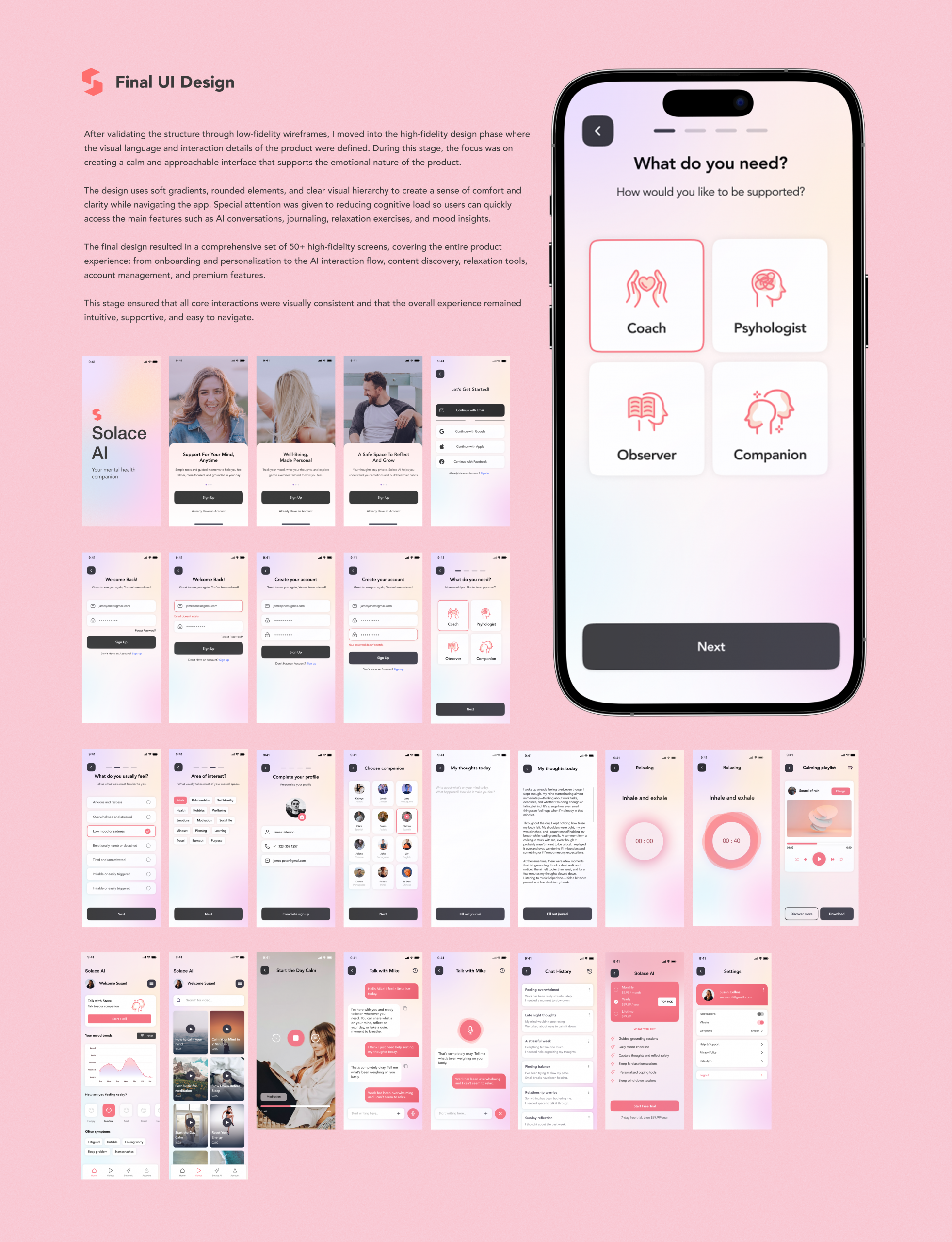
To better understand how users interact with Solace AI, I mapped the overall application flow and the key paths users can take throughout the experience. The goal was to design a simple and supportive structure where users can quickly access tools that help them reflect, relax, and process their emotions.
After onboarding and a short personalization process, users enter the main dashboard, which acts as the central hub of the application. From there, they can start a conversation with the AI companion, write a journal entry, explore calming exercises, or access curated content designed to support mental wellbeing.
This flow highlights how different features connect within the app and how users can move between reflection, guidance, and relaxation depending on their current emotional needs.
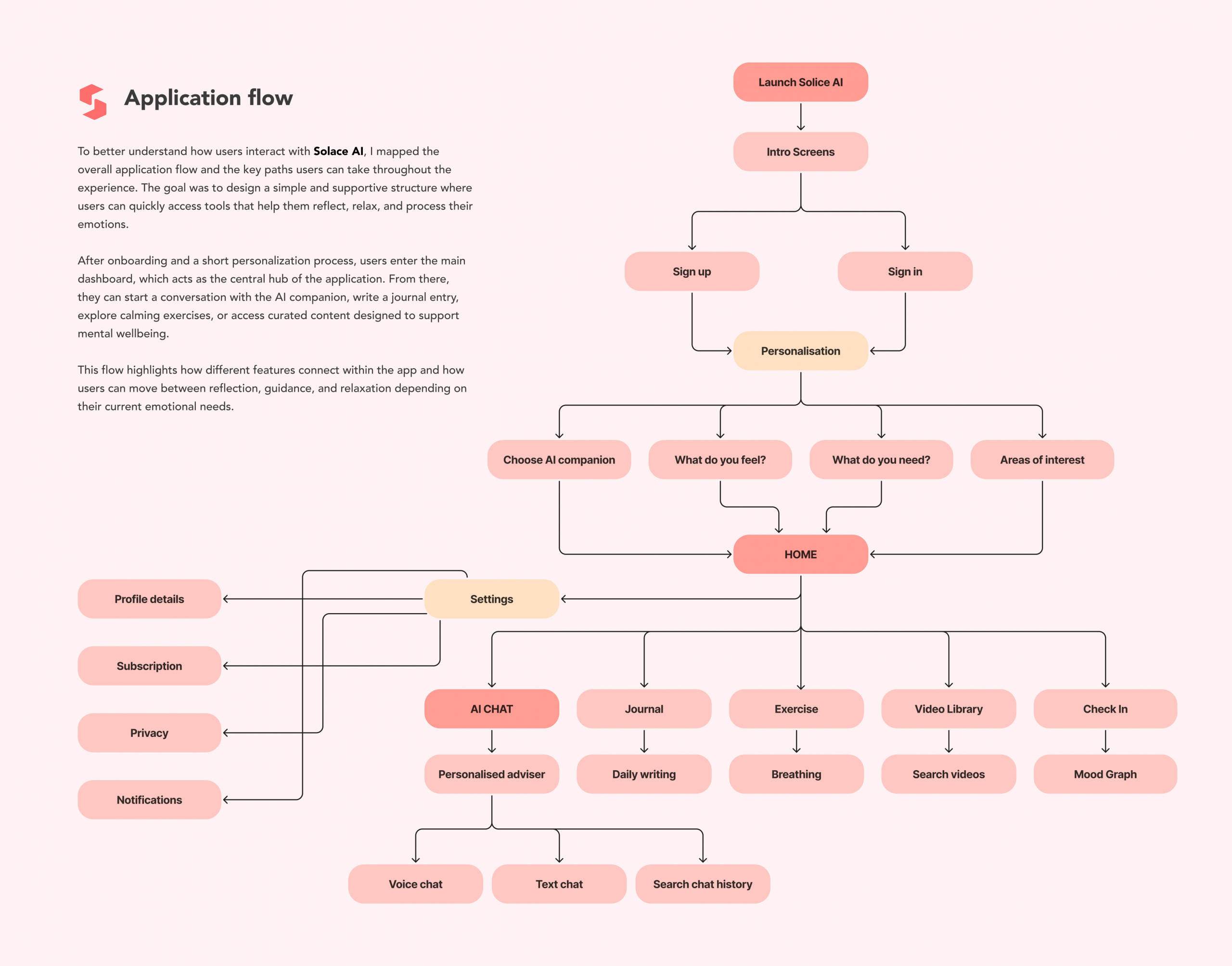
To better understand how users interact with Solace AI, I mapped the overall application flow and the key paths users can take throughout the experience. The goal was to design a simple and supportive structure where users can quickly access tools that help them reflect, relax, and process their emotions.
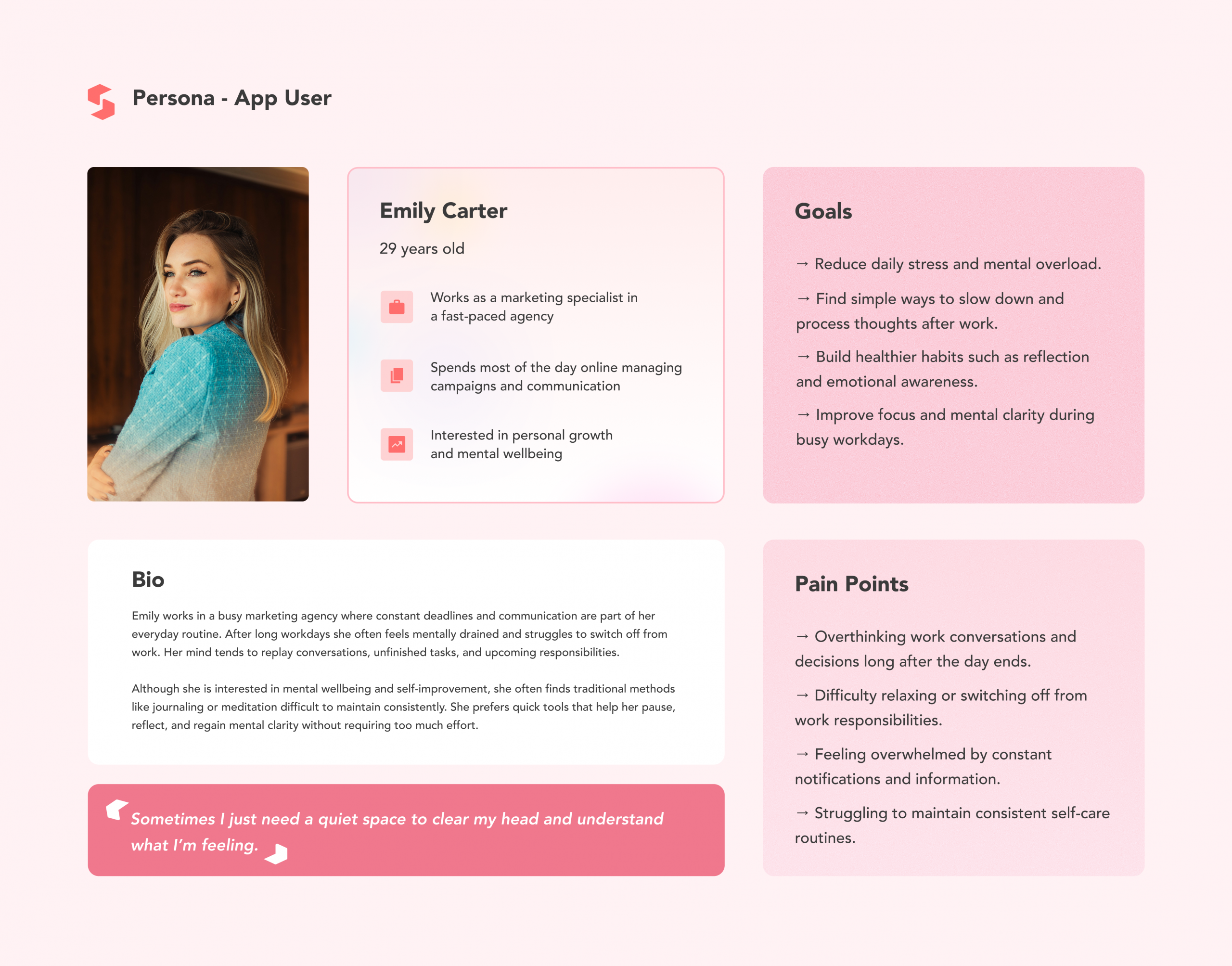
“Sometimes I just need a quiet space to clear my head and understand what I’m feeling.”
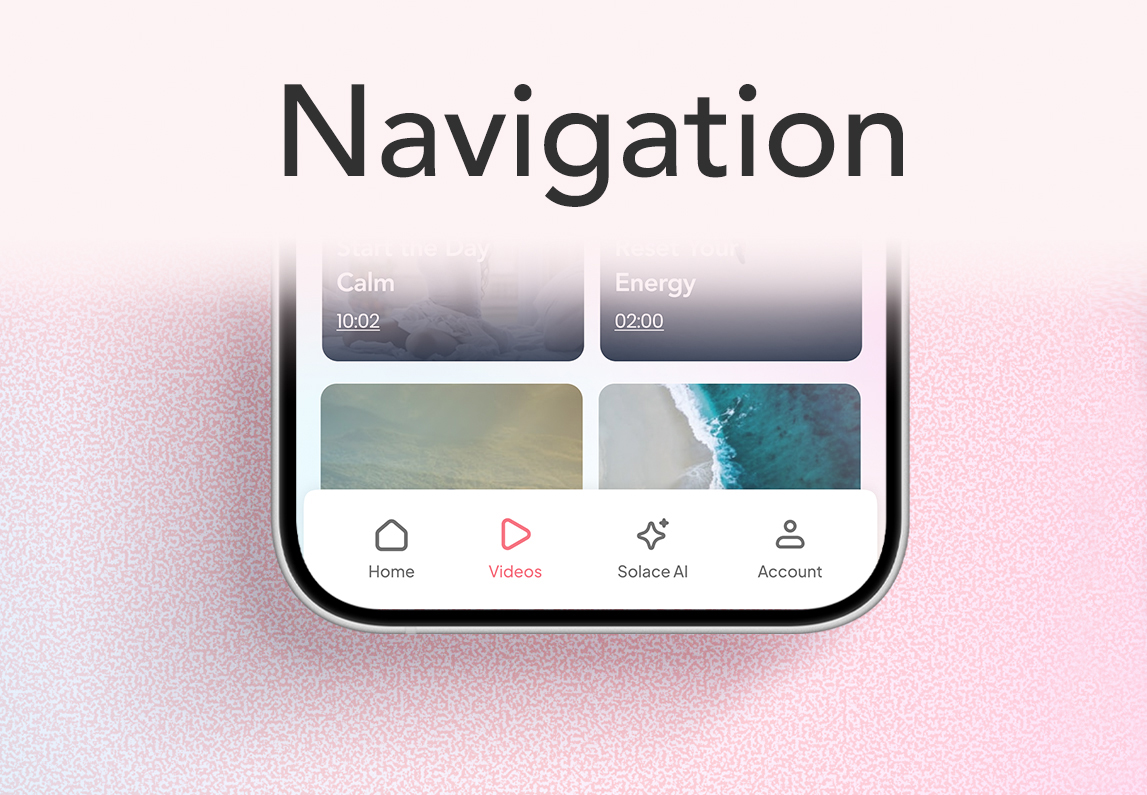
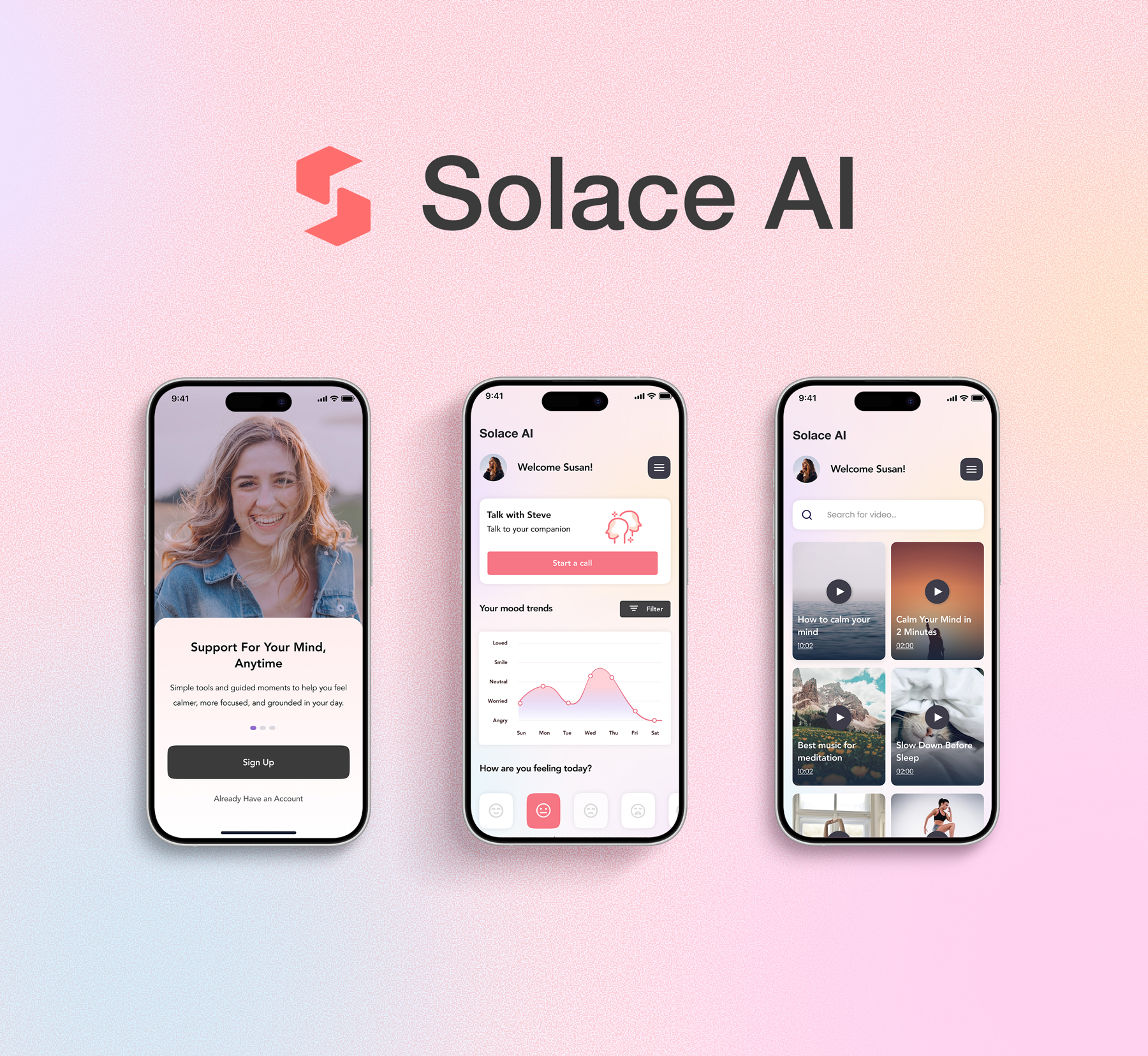
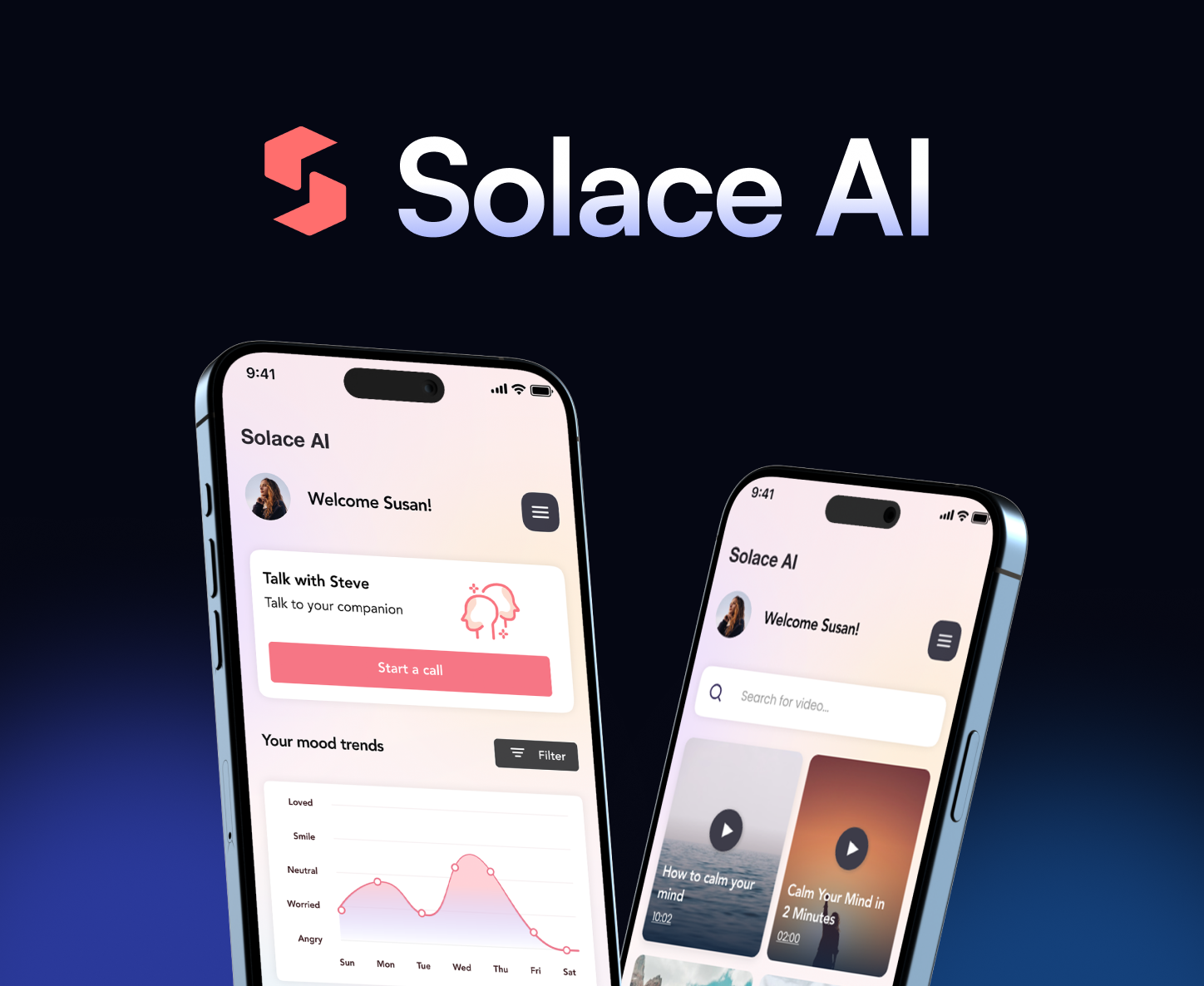
The navigation was designed to be simple and intuitive, allowing users to easily move between the main parts of the application. From the home screen, users can quickly access the video library, the AI companion, and their personal account settings.
The AI tool represents the core feature of the product, so it is accessible through multiple paths. Users can start interacting with the AI directly from the home screen or navigate to the dedicated AI tab, providing two clear routes to reach the main functionality of the app.
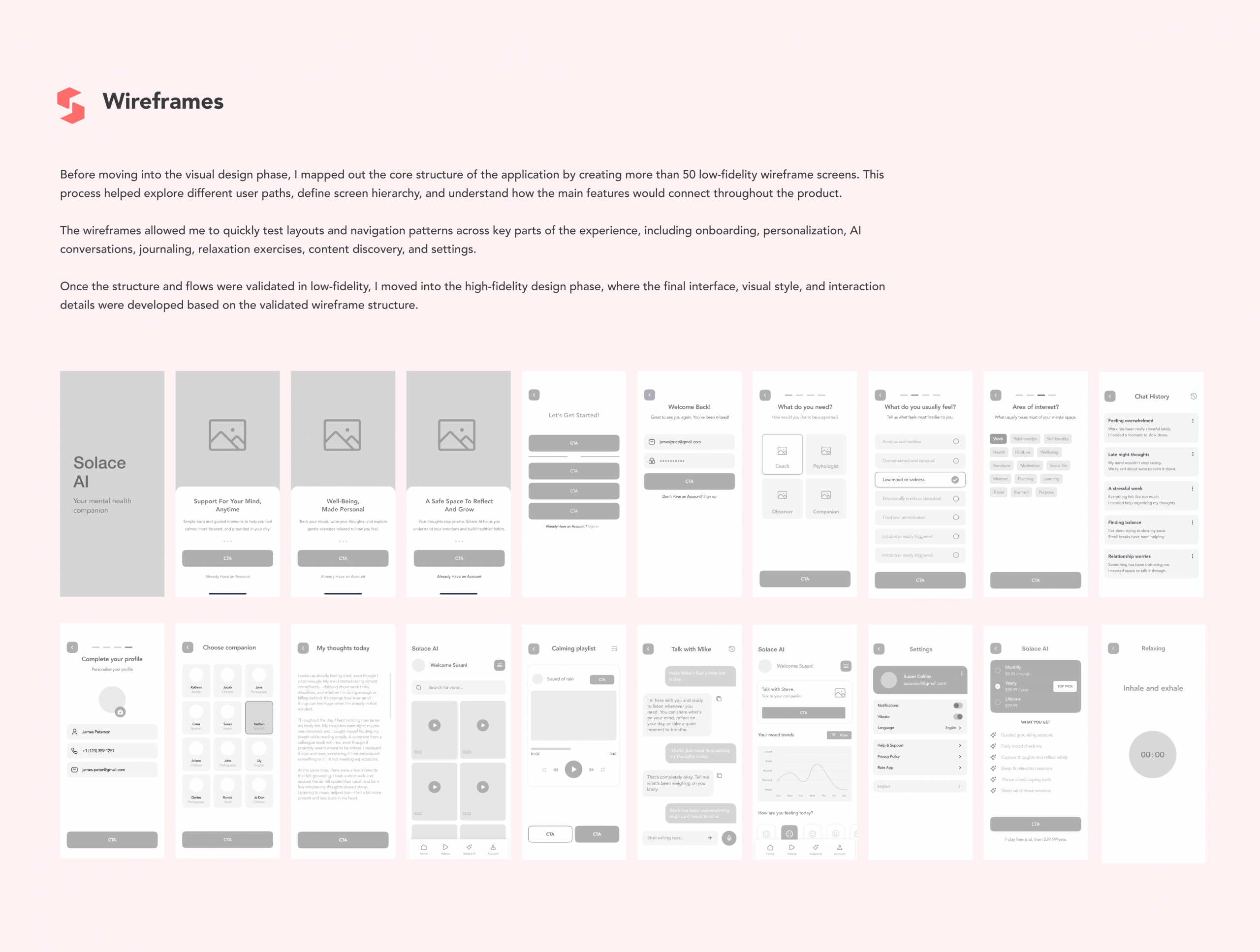
Before moving into visual design, I created a large set of low-fidelity wireframes to map the overall structure of the product.
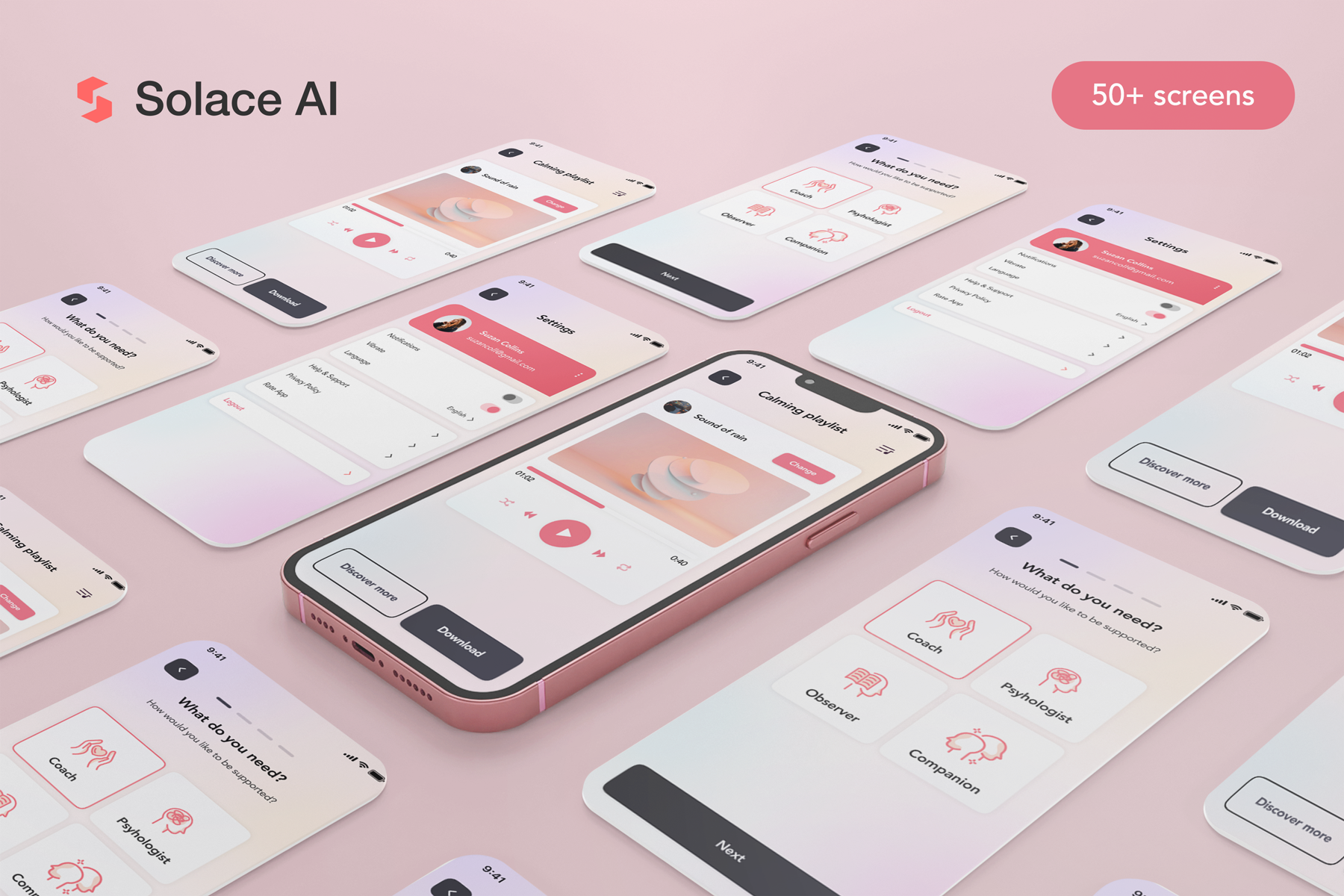
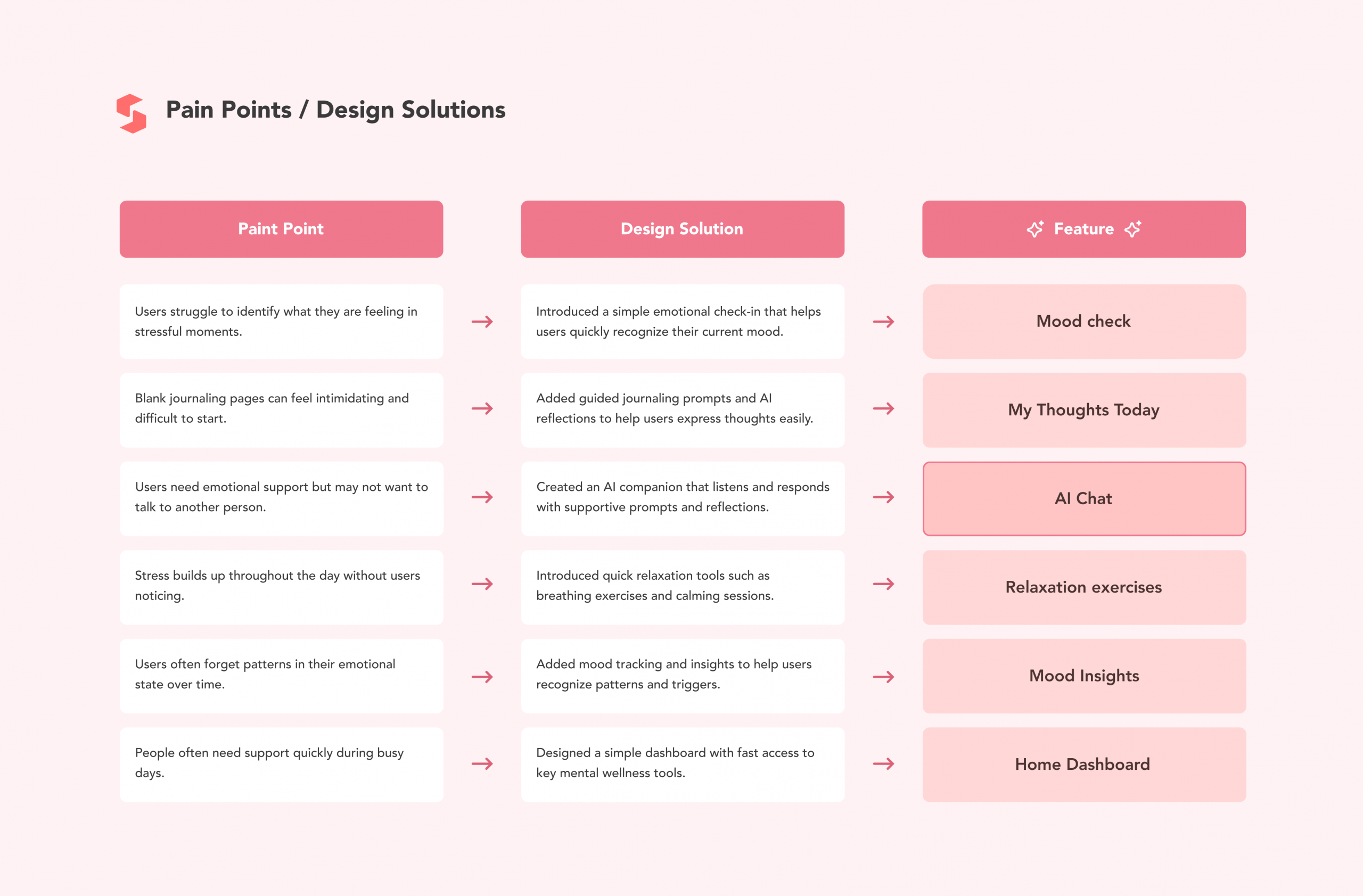
Based on the identified user needs and frustrations, I mapped the main pain points and translated them into practical design solutions. The goal was to ensure that each key challenge users face is directly addressed through a specific feature within the app.
By connecting user problems with clear product solutions, the design focuses on providing emotional support, simplifying reflection, and offering accessible tools such as AI conversations, guided journaling, relaxation exercises, and mood insights.
Important info: Designing Solace AI was an engaging exploration of how AI-driven tools can support people in everyday moments of stress, reflection, and emotional awareness. The project highlights how thoughtfully designed digital experiences can provide accessible mental wellness support through conversation, journaling, and calming exercises.
At the same time, it is important to recognize that tools like this should be approached responsibly. AI can offer helpful guidance and space for reflection, but it is not intended to replace professional medical or psychological care. Instead, it can act as a complementary support tool that helps users better understand their thoughts and emotions.